Shipping & LogisticsGlossary
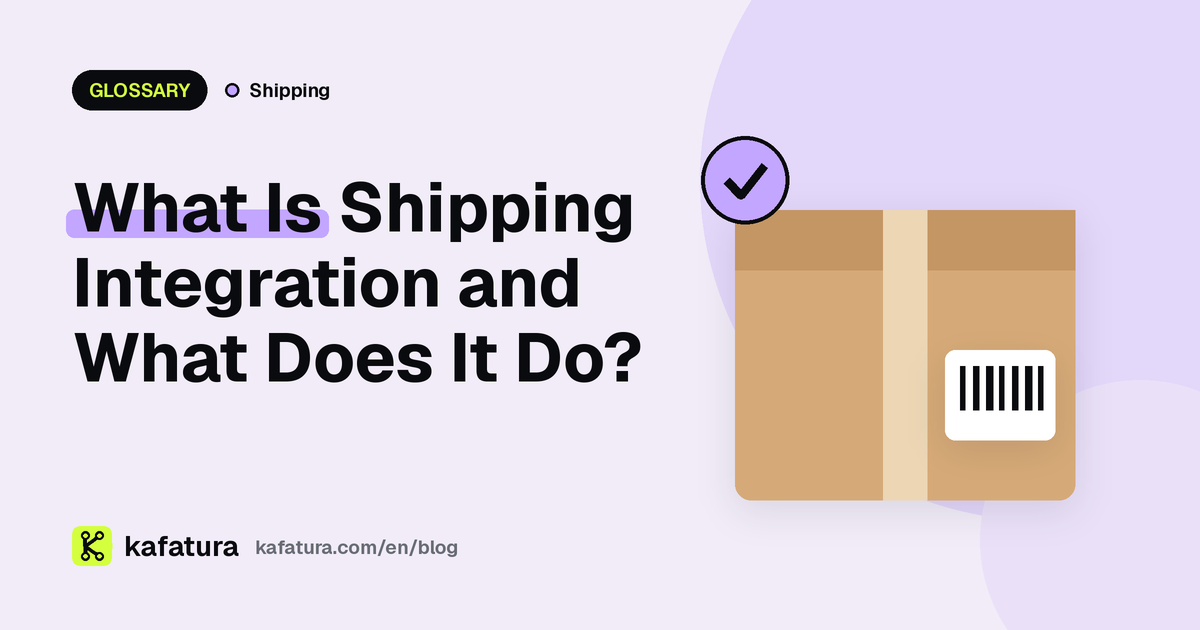
What Is Shipping Integration and What Does It Do?
Last checked against regulations: October 3, 2026
In short
Shipping integration is a connection that automates creating a shipment from an order, printing labels and barcodes, sending the tracking number to the marketplace and tracking return shipments.
Contents
The short answer to what shipping integration is: it is a connection that automatically transfers order details from your sales channel to the shipping carrier's system, creates the shipping label and barcode, and sends the tracking number and delivery status back to the marketplace. This way, you don't have to type addresses into the carrier's screen or copy tracking numbers into your panel for every order.
What is shipping integration, and how does it work?
A typical flow consists of these steps:
- An order comes in from a marketplace or your own website; the buyer's name, address and product details are transferred to the integration.
- The integration opens a shipment record with the carrier using the volumetric weight (desi) and weight data on the product card.
- A label containing the shipment barcode is generated; you print the label and stick it on the package.
- The tracking number is sent to the marketplace, and the order moves to "shipped" status.
- Status changes at the carrier (in transit, out for delivery, delivered) are tracked and reflected in the order status.
This flow can be set up as part of a broader marketplace integration or on its own.
Labels, barcodes and tracking numbers
The shipment barcode on the shipping label and the GTIN/EAN barcode on the product are different things. The product barcode identifies the product; the shipment barcode identifies that specific package in the carrier's system and is generated anew for every shipment. We explained how product barcodes are structured in our article what are barcodes, GTIN and EAN.
Sending the tracking number to the marketplace is proof that the order was shipped on time. In a distance sale, the seller must ship the goods within the promised time and, in any case, within 30 days at the latest; marketplaces' handover deadlines are shorter than that. If the tracking number is sent late, the order may appear to have shipped late even if the package left on time.
Shipping information is also linked to the invoice: the e-archive invoice (e-Arşiv) issued for online sales includes the name or trade name and the tax ID number (VKN)/Turkish ID number (TCKN) of the party carrying the shipment. The integration can also transfer this information to the invoice; for all mandatory fields, see our article on e-Arşiv invoice details for online sales.
Desi and shipping costs
Shipping costs are mostly based on desi. For domestic shipments, desi is calculated by multiplying the package's width, length and height (cm) and dividing the result by 3000; the carrier compares the desi with the actual weight in kilograms and charges whichever is greater. Because the integration carries the desi value from the product card into the shipment record, it is important to enter this value correctly based on the packaged product. For details of the calculation, see our article what is desi.
Return shipping
In a distance sale, the consumer can exercise the right of withdrawal within 14 days of receiving the goods and must send the goods back within 14 days of the withdrawal notice. Since January 1, 2026, the consumer cannot be held responsible for the cost of a return sent with the carrier designated by the seller; if the carrier was not specified in advance, the consumer cannot be charged either.
Shipping integration also tracks the return shipment: it updates the order status when the return package is on its way and when it reaches the warehouse. This way, the product can be added back to stock after inspection, and the return document is prepared on time. For the full withdrawal rules, see our article on the right of withdrawal in distance sales.
Marketplace-contracted shipping or your own agreement?
Most marketplaces let sellers use the carriers they have contracted with; some sellers, on the other hand, sign a contract directly with a carrier. The general differences are as follows:
| Topic | Marketplace-contracted shipping | Your own shipping agreement |
|---|---|---|
| Contract | Between the marketplace and the carrier | Between you and the carrier |
| Label and tracking number | Usually obtained from the marketplace panel or its API | Obtained from the carrier's system; you send the tracking number to the marketplace |
| How the cost reaches you | A shipping invoice with 20% VAT (KDV) issued by the marketplace, usually offset against the marketplace payout (hakediş) | The carrier's invoice, paid separately |
| Price | The marketplace's rate card | Negotiated based on your shipment volume |
| Scope of use | Only that marketplace's orders | All channels, including your own website |
Which option can be used for which category and shipment type varies by marketplace; check the current terms in your seller panel. We showed how shipping costs affect profitability with an example in our guide to calculating profit on marketplaces.
Frequently asked questions
Are shipping integration and marketplace integration the same thing?
No. Marketplace integration covers the flow of products, stock, orders and invoices; shipping integration covers shipment creation, labels, tracking and return shipping. In most solutions, the two work together.
What happens if the tracking number isn't sent to the marketplace?
The order appears as not yet shipped on the marketplace. Even if the package left on time, it may count as a late shipment, and the customer cannot track the shipment.
Who pays for return shipping?
Since January 1, 2026, the consumer cannot be held responsible for the cost of a withdrawal return sent with the carrier designated by the seller. If the carrier was not specified in advance, the consumer cannot be charged either.
Resources
- Republic of Türkiye Ministry of Trade – Information on distance contracts
- Moral Hukuk – Amendment to the Distance Contracts Regulation
- Sürat Kargo – Price calculation (desi)
- Yurtiçi Kargo – How prices are calculated
- GİB – Tax Procedure Law (VUK) General Communiqué No. 509, current text (2026)
- Alomaliye – VAT on commission invoices in e-commerce
#shipping integration#shipping label#tracking number#return shipping#volumetric weight (desi)
Kafatura Editorial Team
We answer the everyday questions of marketplace sellers using a verified regulatory knowledge base. If you spot an error or something out of date, please let us know.
This article is translated from the Turkish original; regulatory references apply to Türkiye. Read the Turkish original →